A Phone-Free Evening Routine That Gives You Your Night Back
Build a calm, realistic phone-free evening routine with a repeatable 60-minute plan and a shorter 20-minute version for busy nights.
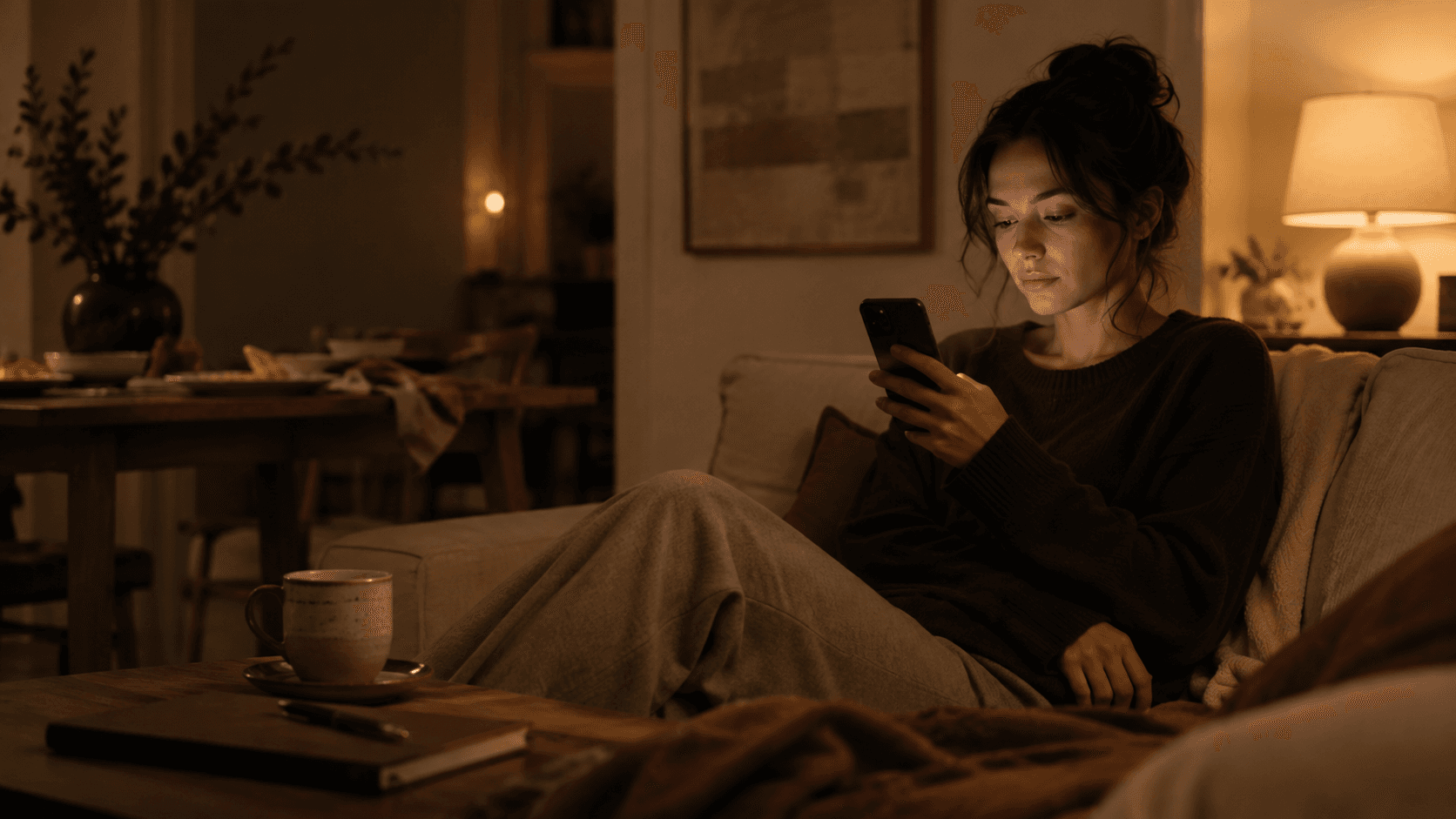
Not a perfect digital detox. Just one part of the night that feels like it actually happened.
At 8:12 p.m., you sit down for a quick break. You plan to check one message before making tea. At 9:03, you are still on the sofa, the dinner plates are in the sink, and you have watched videos from four people you do not follow.
Nothing dramatic happened. That is why the evening vanished so easily.
A phone-free evening routine should help you keep a part of the night for yourself. It should not turn the hours after work into another self-improvement project.
You need three things: a clear stopping point, something pleasant waiting on the other side, and a plan for the moment your hand reaches for the phone before you have made a decision.
Quick answer
Choose one repeatable cutoff, move the phone beyond easy reach, use a small physical action to mark the transition, and decide in advance what you will do next.
Start with twenty minutes if an hour feels unrealistic. The best phone-free evening routine is not the most impressive one. It is the one you can repeat when you are tired.
Why evenings disappear into a feed
By the end of the day, you have already answered messages, changed tasks, made small decisions and handled other people’s demands. Scrolling asks almost nothing from you. One tap produces movement, sound, novelty and another choice made on your behalf.
Evenings also have weak boundaries. A morning usually has a deadline. At night, there may be no clear moment when work ends and rest begins. The phone slips into that blank space and keeps it busy.
Sleep can be affected too, particularly when phone use continues in bed or close to sleep. Studies in adults have linked bedtime mobile use with poorer sleep outcomes, and one randomized pilot trial found that restricting phone use before bed improved sleep latency, duration, quality and pre-sleep arousal among participants with poor sleep.
This does not mean every screen has the same effect or that one late-night message ruins sleep. Content, timing, brightness, emotional arousal and individual differences all matter.
The practical point is simpler: a feed can delay the moment your night becomes quiet.
You do not need a perfect digital detox. You need an evening with an ending.
The 60-minute phone-free evening routine
Choose a start time that fits your life. It could be after dinner, at 8:30 p.m., or one hour before bed. The exact hour matters less than having a signal you can recognize.
Minute 0: Close the day on purpose
Give yourself five minutes to finish what genuinely needs a reply.
Check tomorrow’s first commitment, send the message you were postponing, set the alarm and turn on any emergency contacts or exceptions you need. Then close the apps deliberately.
A clear handoff works better than drifting away from the phone and hoping you do not return.
Minute 5: Put the phone somewhere inconvenient
Charge it outside the bedroom, leave it near the front door, or place it on a shelf that requires you to stand up.
Keep it reachable for a real need but awkward during an ordinary urge. A phone facedown beside you is still part of the room. Your hand knows exactly where it is.
Minute 10: Create a physical transition
Change into comfortable clothes, wash your face, dim one light or make tea.
Use the same small action most nights. The routine does not need six candles and a twelve-step drink. It needs one cue that can survive a tired Tuesday.
Minute 15: Give your hands a simple job
The first few minutes without the phone can feel oddly empty.
Wash the dishes, water the plants, fold a small pile of clothes, stretch gently or prepare breakfast for tomorrow.
This is not a productivity sprint. A physical task helps your attention return to the room.
Minute 30: Choose one low-pressure pleasure
Pick something you would still want on a low-energy night.
Read ten pages, sit on the balcony, sketch badly, listen to one album, talk to someone in the house or call a friend without doing anything else.
Do not build the routine around the person you wish you were. Build it around the person who actually comes home tired.
Minute 50: Make tomorrow slightly easier
Use five minutes to remove one source of morning friction.
Put your keys in one place, fill a water bottle, choose clothes or write tomorrow’s first task on paper. Then stop.
The goal is not to start tomorrow’s work tonight. It is to quiet one loose end.
Minute 55: Let the final minutes stay quiet
Sit or lie down without adding new information.
Read, breathe slowly, listen to something familiar or simply notice that the room has become quieter.
The aim is to let the night become less stimulating so tiredness has room to appear.
The 20-minute version for difficult nights
Some evenings will be late, messy or crowded. You may need to stay reachable. You may have children, a partner on a different schedule, shift work or no patience for a full hour.
Use this version:
- Finish essential messages, set the alarm and choose emergency exceptions.
- Put the phone across the room for twenty minutes.
- Wash your face, change clothes or make a drink.
- Do one physical task for five minutes.
- Spend the remaining time reading, stretching, listening or talking to someone.
Twenty minutes still changes the shape of the evening.
A small routine you repeat is more useful than an ambitious one you avoid.
What about alarms, music and emergencies?
A phone-free evening does not require pretending the phone has no useful functions.
Use Do Not Disturb with selected contacts allowed through. Set the alarm before the cutoff. Download the music, podcast or audiobook you want before the routine begins, then keep the screen out of reach.
If you use the phone for reading, choose a specific book or article and avoid returning to the home screen.
The goal is not zero technology. It is to stop an open-ended feed from deciding where the evening goes.
What to do when your hand reaches for the phone
Expect the reach.
You may be halfway through a chapter and suddenly remember a message, headline or video you meant to send.
Write the thought on a scrap of paper. Most urges lose some urgency once they have somewhere to land.
For a stronger urge, wait sixty seconds. Stand up, take three slower breaths, stretch or walk to the phone and pause before touching it.
You are allowed to use it. The pause keeps the decision from disappearing.
Where FreeInFive fits into the evening
The hardest part of a phone-free evening is rarely choosing the routine. It is catching the automatic tap before a feed has already pulled you in.
FreeInFive can add friction at that exact doorway.
Soft Block places a mindful pause before selected apps. Hard Block can enforce a firmer limit. Scheduled blocks can protect the evening window you choose.
With Earn Your Scroll, extra access can require a small real-world action first, such as writing a reflection, doing arm raises or completing push-ups.
The action is not the evening routine. It is a brief interruption that gives your original plan time to return.
You can still choose to scroll. The difference is that the night no longer disappears through a tap you barely noticed.
Give your evening a clear beginning
Get FreeInFive on Google Play or the Apple App Store.
Try it tonight without redesigning your life
Choose one cutoff time.
Set the alarm and emergency exceptions.
Put the phone in another room for twenty minutes.
Do one small physical task.
Choose one quiet activity you genuinely enjoy.
Notice the details a feed usually covers: the room getting darker, a conversation reaching its natural end, or the moment your body begins to feel tired.
Those details are small. They are also what make an evening feel like it happened.