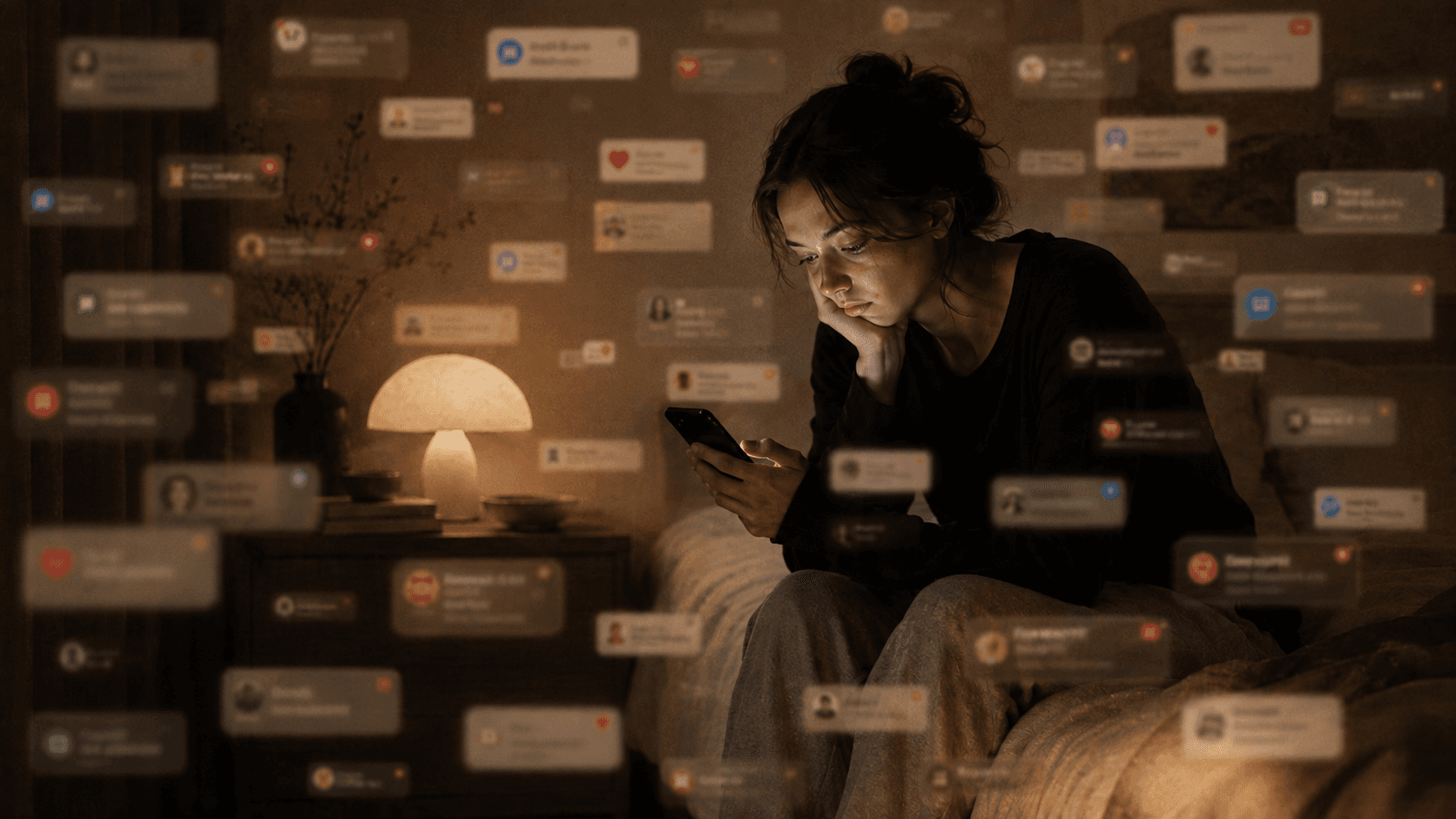
Why Social Media Can Make You Feel Lonely When You Are Surrounded by People Online
Social media can provide constant contact without real connection. Learn why passive scrolling can intensify loneliness, how comparison plays a role, and what helps in the moment.
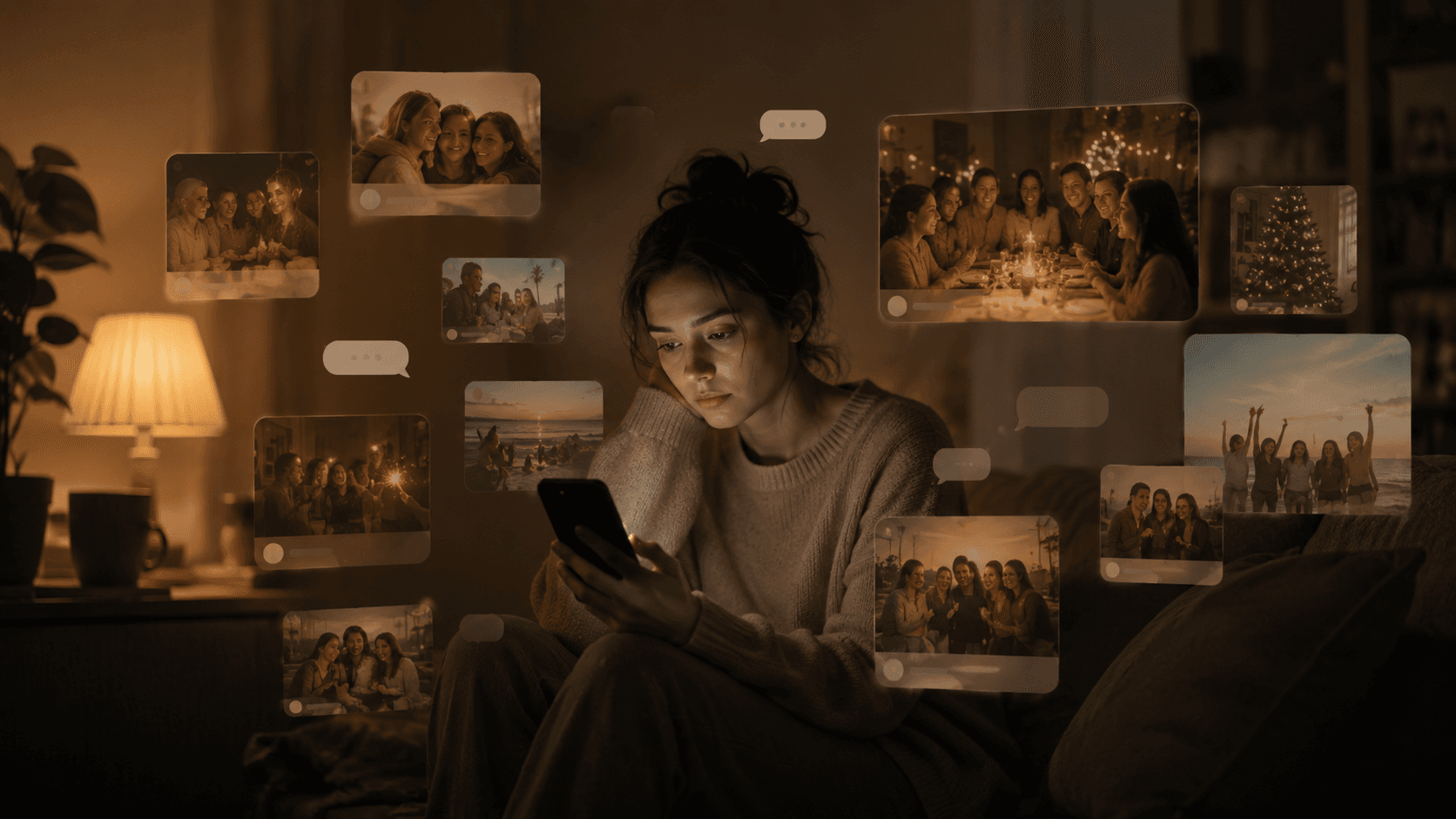
A feed can show you hundreds of people and still leave you with nobody who knows how your day felt.
You open the app because the evening feels quiet. Twenty minutes later, you have seen a birthday dinner, a holiday, two engagements and an argument between people you do not know.
Nobody asked how your day went.
The feed gave you social information. It did not give you the feeling of being known, answered or included.
That gap explains why social media can make loneliness sharper even while it fills the screen with people.
Quick answer
Passive scrolling gives you contact without much reciprocity. You see other lives but receive little direct attention, then compare your ordinary moment with selected moments from everyone else.
Active use can feel different when it includes a real conversation, a thoughtful reply or a plan to meet.
The useful change is to move from watching many people toward contacting one person.
Contact is not the same as connection
A feed can expose you to dozens of familiar faces in minutes. Your brain receives names, expressions, voices and social news. The experience still lacks the back-and-forth that makes a relationship feel alive.
A conversation changes because you are present. Someone notices your answer, remembers a detail and responds to what you said. A feed continues whether you are there or not.
Loneliness is shaped by the gap between the connection you want and the connection you feel.
More social information does not automatically close that gap.
A 2022 meta-analysis of 82 articles found a small overall association between social-network use and loneliness. The type of use mattered. Passive and problematic use had clearer positive associations with loneliness, while general and active use did not show the same relationship.
Why comparison lands even when you know the feed is edited
You know that people post selected moments. The comparison can still arrive before that knowledge has time to help.
Your ordinary Wednesday includes unfinished work, silence, laundry and a meal that was fine.
The feed compresses other people’s celebrations, achievements and flattering angles into the same ten minutes.
The comparison is uneven. Your full day is being measured against a collection of moments chosen because they were worth showing.
Passive use has also been linked with lower affective well-being in experimental and observational research, though effects differ across users and platforms.
The loneliness loop
The cycle usually begins with a reasonable need.
You feel lonely, bored or left out, so you open the app looking for something social.
The feed delivers contact and novelty. It may even help for a few minutes. Then you close it without having spoken to anyone, and the original need is still waiting.
That small disappointment makes another check more likely later. Occasionally a message or meaningful post appears, which teaches the brain that the next visit might finally provide what you wanted.
The platform can support connection. The open-ended scroll is simply poor at guessing which kind you need.
When social media genuinely helps
Online communities can matter deeply when local support is limited, an interest is rare or a person cannot easily meet others in the same situation.
A group chat, live discussion or thoughtful exchange can provide real belonging.
The useful clue is reciprocity.
Did someone respond to you? Did the interaction continue? Did you leave with a clearer sense that another person had noticed you?
Keep the parts that create that feeling. Reduce the passive feed that places you beside other people’s lives without inviting you into them.
Turn a social urge into social contact
1. Name the need
Before opening the feed, choose the closest word: lonely, bored, anxious, curious or avoiding something.
The label does not need to be perfect. It stops every uncomfortable moment from receiving the same answer.
2. Contact one person
Send a voice note, ask a real question or call for five minutes.
Choose the person before opening any social app so the feed does not take over the route to them.
3. Use the platform for a job
Reply to a message, comment thoughtfully, post something or make a plan.
Leave when that job is complete.
Direct use has an ending. Passive browsing can continue indefinitely.
4. Reduce spectator time
Set a shorter limit for the feed that leaves you feeling worst.
In one randomized study, college students assigned to limit three social platforms to about thirty minutes total per day reported reductions in loneliness and depression over three weeks. The study was small and does not prescribe the same limit for everyone.
5. Create an offline next step
Suggest a walk, meal, call or shared work session.
Connection becomes easier when the next contact has a time and place instead of remaining a vague intention.
Where FreeInFive fits
FreeInFive can interrupt the moment when a social need is about to become passive scrolling.
Soft Block creates a breathing pause after your chosen limit. Hard Block asks for a small real action before extra access.
A written challenge can ask you to name why you want the app, which may be enough to notice that you wanted a person instead.
Scheduled Blocks can protect evenings, meals and focus windows.
The pause does not replace connection. It gives you time to choose the person you were looking for.
Leave the audience. Contact one person.
Get FreeInFive on Google Play or the Apple App Store.
Frequently asked questions
Does social media always increase loneliness?
No. The relationship is small overall and depends on the person, platform and style of use.
Direct conversations and supportive communities can help people feel connected. Passive or problematic use shows a clearer link with loneliness.
Why do I feel lonely after Instagram?
The feed may give you social comparison and contact without reciprocal attention.
You have seen other people without feeling seen yourself.
Should I take a complete social-media break?
A break can reveal how a platform affects your mood.
You can also begin by reducing passive feed time while keeping direct messages and intentional contact.
What should I do when I feel lonely at night?
Contact one safe person directly, spend time near someone in your home, join a live community you trust or plan a specific conversation for the next day.
Seek professional support when loneliness is persistent or severe.